€3,00 EUR
€1.500,00 EUR 1kg
Price plus shipping
Delivery time: 1-2 business days (PT – international may vary)
reicht für ca. 300 plants

In stock

Regionally adapted landrace. Open-pollinated & non-hybrid – 100% free from genetic engineering & synthetic fertilisers. Ecologically propagated – non‑proprietary variety.
Bohnensamen2

Harvest year:

2026

Seed viability:

2 years (species-specific)
Detailed information on germination capacity

Description

Cultivation & Characteristics

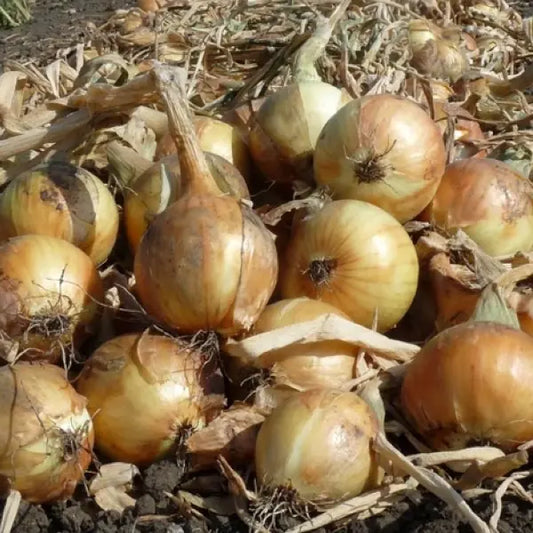
Onion ‘Rouge de Genève’ – an attractive dark purple Geneva landrace for storage and onion plaits.

This open-pollinated onion from Geneva produces medium to large, flattened round bulbs with firm, dark red to purplish-violet skins and attractively coloured inner rings. Its aromatic, mildly savoury flavour makes it suitable for eating raw as well as for cooked dishes. The tightly closed neck and firm skin allow long-term storage well into winter, while the durable foliage can traditionally be woven into onion plaits. In Mediterranean climates, autumn or very early spring sowing is recommended. As a long-day variety, it matures particularly reliably in Central European climates, while its bulbs may remain smaller in more southerly regions.

  Origin & History

‘Rouge de Genève’ is a regional landrace from the canton of Geneva. Alexandre Grosjean, a vegetable grower and seed producer in Chêne-Bougeries, selected and propagated his own line there. In 1941, the variety was featured in the Revue horticole suisse in an article about particularly recommended vegetable varieties. Its firm skin, tightly closed neck and reliable storage qualities made it a valued storage onion in Geneva and a preferred variety for traditional onion plaits.

The Grosjean family maintained the variety over several generations and continued propagating it in Chêne-Bougeries until 2017. Another line was preserved in the Changins genebank and subsequently entered the ProSpecieRara conservation network. F. Lequint propagated it again in its original region of Geneva, and today several initiatives continue its breeding and conservation. In Italian-language variety directories, it is also known as ‘Rossa di Ginevra’. ‘Rouge de Genève’ thus combines a living regional seed heritage with the characteristic qualities of a rare, open-pollinated Geneva landrace.

  Appearance & Characteristics

The plant develops upright, hollow, tubular leaves ranging from blue-green to medium green and reaches approximately 30–50 cm in height during normal bulb cultivation. The bulbs develop close to the soil surface and, when fully mature, have a firm, smooth skin and a tightly closed neck. In the second year, hollow flowering stems usually reach around 80–120 cm in height, bearing spherical umbels consisting of numerous small white flowers. Young plants tolerate brief, light frosts down to around −1 °C, but should be protected during severe or prolonged frost.

Onion details:

  • Size: Medium to large, usually around 8–10 cm in diameter and weighing 100–120 g

  • Shape: Round to distinctly flattened, with a tightly closed neck

  • Color: Dark red to purplish-violet skin and white flesh with red to violet rings

  • Texture: Firm and juicy, crisp when raw and tender when cooked

  • Flavor: Aromatic, mildly savoury, slightly sweet and comparatively low in pungency

 Usage & Cultivation Highlights

The colourful bulbs are suitable for thinly slicing into salads, sandwiches and cold vegetable dishes. Steaming, frying, braising or roasting brings out a milder, sweeter flavour. They can also be pickled, fermented and used as a garnish. Fully mature, carefully dried bulbs can be stored well into winter. The dried foliage, provided it is sufficiently long, is particularly suitable for weaving into decorative and practical onion plaits.

‘Rouge de Genève’ is a mid-season variety and develops somewhat more slowly than many yellow-skinned varieties. In a variety trial in Geneva, it performed well both when directly sown and when grown from transplants, showing good field emergence and high yields. Its moderate nutrient requirements, firm skin and tightly closed neck contribute to reliable cultivation and good storage qualities. As a long-day variety, it responds to the increasing day length of spring and early summer to initiate bulb formation, making early sowing particularly beneficial.

Compared with many round red onion varieties, ‘Rouge de Genève’ stands out for its flattened round shape, intense dark purple colouring and particularly good storage qualities. Its firm skin, tightly closed neck and suitability for onion plaits combine practical value with a rare regional seed-growing tradition from Geneva.

Cultivation_Overview_-_Anbau_im_Uberblick_-_Visao_geral_do_cultivo_-_www

Origin & Cultivation at a Glance

First mention:

1941

Origin:

Switzerland

Breeder:

Alexandre Grosjean

Propagation site:

Geneva – Switzerland

Suitable for:

Open field, Raised bed, Balcony / pot, Urban gardening

Overwintering:

Possible outdoors in mild, sheltered locations

Special features:

High-yielding
benjis-seeds-plant-growing-instructions-icon

Cultivation guide for

Onion 'Rouge de Genève'

Growing difficulty:

Light to medium

Care requirements:

Medium – requires some attention.
The variety grows best in loose, humus-rich, well-drained sandy loam in a warm position. Before sowing, loosen the soil, remove weeds thoroughly and prepare the surface to a fine tilth. Avoid applying fresh fertiliser and excessive nitrogen. If the soil is low in nutrients, a small amount of well-rotted compost can be incorporated.

For direct sowing, make seed drills 1–2 cm deep, with 30 cm between rows. Sow the seeds thinly, cover with fine soil, firm gently and water carefully. At 18–20 °C, germination usually takes 7–14 days. Keep the seedbed evenly moist and consistently free from weeds until the seedlings emerge.

After emergence, thin the young plants gradually to 5–10 cm apart within the row. For sowing under cover, sow the seeds thinly in small trays filled with seed compost and cover only lightly. After around 8–10 weeks, carefully separate the young plants and plant them out at the same spacing. Cover only the roots with soil, ensuring that the base of the developing bulb is not planted too deeply.

Weed regularly during the slow early growth stage and loosen only the surface of the soil. Water evenly during bulb formation, avoiding waterlogging and significant fluctuations in moisture levels. Once most of the foliage has fallen over, reduce watering and harvest the bulbs in dry weather. Then allow them to cure for around two weeks in a dry, well-ventilated place sheltered from direct sunlight. Store only undamaged bulbs with completely dry necks in a cool, dry, frost-free place.

Mediterranean climate

In Mediterranean climates, we recommend direct sowing from October to November or very early, from January to February, in a sunny, airy and well-drained position. Sowing under cover is also possible during the same periods if the outdoor seedbed cannot be kept reliably and evenly moist. Plant out young plants raised under cover after around 8–10 weeks. Autumn cultivation takes advantage of the mild winter months, although prolonged periods of cold weather can encourage premature bolting. As a long-day variety, ‘Rouge de Genève’ requires sufficiently long days in spring and early summer to produce large bulbs. In more southerly regions, the bulbs may therefore remain smaller. Following autumn sowing, harvesting usually takes place from late spring to early summer, while early spring sowing allows harvesting in summer.

Central European climate

In Central European climates, we recommend direct sowing from March to April in a warm, airy position with full sun. Alternatively, seeds can be sown under cover from February to March in small trays, with the young plants planted out after around 8–10 weeks, between March and April. Starting cultivation as early as possible encourages vigorous foliage growth before increasing day length triggers bulb formation. Keep the seedbed evenly moist and free from weeds during the slow germination period. The variety tolerates brief, light frosts, but severe frost should be avoided. Harvesting takes place mainly from July to September, once most of the foliage has fallen over and the necks are fully mature.

Cultivation tips:

• For large bulbs, sow as early as possible to allow vigorous foliage to develop before bulb formation begins.
• Keep the seedbed consistently free from weeds during the slow early growth stage.
• Plant young plants only deep enough to keep the base of the developing bulb close to the soil surface.
• Once most of the foliage has fallen over, reduce watering and harvest in dry weather.
• Allow the harvested onions to cure for around two weeks in a dry, well-ventilated place sheltered from direct sunlight.
• Store only undamaged bulbs with completely dry necks or braid them into onion plaits.

Storage instructions:

Store seeds in a cool, dry, dark, and airtight environment to maximize shelf life and germination.
Detailed information on seed storage
Plant_Profile_-_Pflanzen_Steckbrief_-_Ficha_da_planta_-_www

Plant Profile

Onion 'Rouge de Genève'

Plant details

Botanical name:
Allium cepa L. 'Rouge de Genève'
Botanical family:
Amaryllidaceae – amaryllis family
Plant type:
Bulb vegetables
Growth habit:
Upright growth, Herbaceous
Plant width:
10–15 cm
Plant height:
30–50 cm
Root type:
Fibrous-rooted, Shallow-rooted
Hardy to:
−1 °C possible for short periods.
Cultivation period:
5–8 months
Life cycle:
Biennial (grown as an annual)

Sowing & Planting

Germination type:
Light-independent germinator
Sowing depth:
1-2 cm
Germination temperature:
18-25 °C
Germination time:
7-14 days
Plant spacing:
5-10 cm
Row spacing:
30 cm
Pot culture:
Requires a minimum container size of 10-15 liters.
Pricking out / thinning out:
After emergence, thin gradually to 5–10 cm between plants within the row.
Planting time:
Young plants raised under cover can be planted out around 8–10 weeks after sowing.

Soil

Soil type:
Well-drained, humus-rich sandy loam soil
Soil pH:
6.0-7.0 - slightly acidic to neutral
Nutrient requirements:
Medium feeder
Soil moisture:
Evenly moist, Sensitive to waterlogging
Soil preparation:
Loosen soil before sowing, Apply compost before planting., Prepare soil weed-free and with a fine crumb structure.

Companion planting, Crop rotation & Harvest

Companion plants:
Lettuce, Spinach, Brassicas, Carrot, Beetroot, Dill, Chamomile, Calendula, Tagetes
Incompatible plants:
Dwarf beans, Climbing beans, Pea, Onion crops
Crop rotation guidelines:
• Do not plant after other onion crops – a minimum interval of 3 years is recommended.
• Repeated cultivation at the same site increases disease pressure, leads to nutrient depletion, and impairs soil structure.
• Good preceding crops: legumes, root vegetables, green manure – crop rotation promotes soil health.
• Crop rotation with low-nutrient-demanding plants is recommended to prevent soil fatigue and maintain healthy growing conditions.
• Avoid planting directly after heavy-feeding crops – allow the soil to recover and replenish nutrients first.
Sowing to harvest:
5-6 months
Harvested parts:
Bulbs / onions
Suitable for consumption:
Yes - edible raw or cooked.
Intended use:
Culinary herb, Raw consumption, Salad, Steaming, Cooking, Roasting, Baking, Pickling, Fermentation

Care & Cultivation practices

Water requirements:
Moderate
Plant care techniques:
Thin out after germination when sown directly, Water regularly - even during dry periods, Loosen and hoe, Maintain weed-free
Plant protection:
Protective insect netting is advisable against onion fly, Well-ventilated location and good drainage recommended, Practise crop rotation to prevent onion rots, Frost protection is recommended when temperatures below −1 °C are forecast
Cultivation notes:
Slow early growth – keep the seedbed consistently free from weeds. Sowing or planting too deeply adversely affects bulb formation. Excessive nitrogen fertilisation reduces storage life. Sensitive to waterlogging – use well-drained soil.
Propagation method:
Generative propagation by seed
Propagation:
• This variety is cross-pollinated by insects and belongs to the species Allium cepa.
• For seed production, a minimum isolation distance of 150 m from other varieties of the same species is recommended.
• For seed saving, collect seeds from at least 60 healthy, true-to-type plants.
• After the first growing year, select the best bulbs, allow them to dry for around two weeks in a well-ventilated place, and overwinter them in cool, dry conditions.
• Plant the selected bulbs in spring, burying them up to their tips, and allow them to flower in the second year.
• The seeds are ready to harvest once the capsules begin to open and the black seeds become visible.
• Air-dry the harvested flower umbels in a well-ventilated place, extract the seeds, clean them and dry them completely.

Other names

EN - English names:

• Onion • Bulb onion • Common onion

DE - German names:

• Zwiebel • Speisezwiebel • Küchenzwiebel

PT - Portuguese names:

• Cebola • Cebola-comum

ES - Spanish names:

• Cebolla • Cebolla común

FR - French names:

• Oignon • Oignon commun

Customer Reviews

Be the first to write a review
0%
(0)
0%
(0)
0%
(0)
0%
(0)
0%
(0)

Reviews in Other Languages

Further recommendations for you

Open-pollinated and reproducible